
Liverpool’s clash with Manchester City at Anfield is the kind of fixture where margins matter. The quality on the pitch is obvious, but the tactical decisions made before and during the game could prove just as important.e.
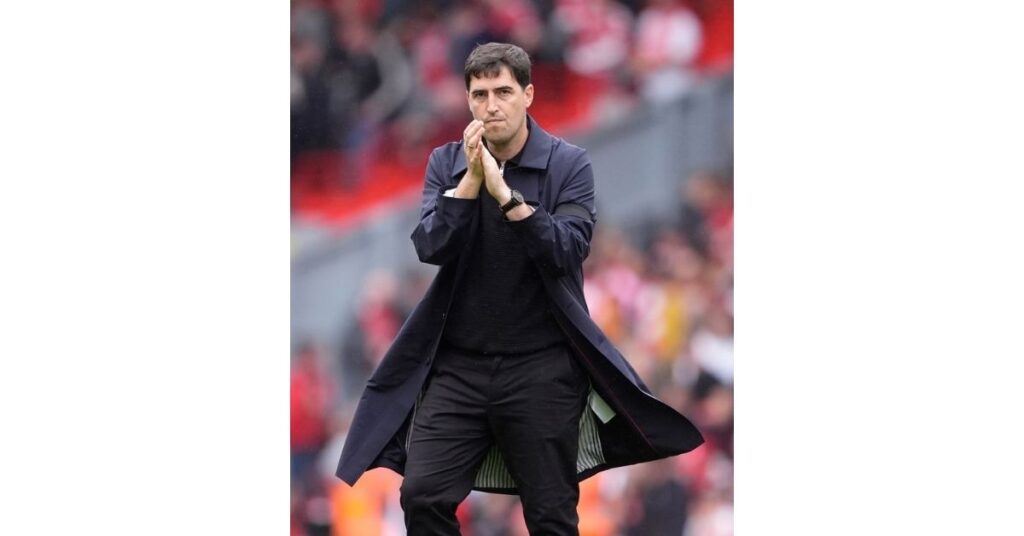
Andoni Iraola during a Premier League match
At the centre of that battle will be Andoni Iraola and Enzo Maresca.
The two managers have contrasting approaches to controlling football matches. Iraola’s philosophy is built around intensity, aggressive pressing, vertical attacks and quick transitions. Maresca, meanwhile, prefers structured possession, positional rotations and carefully constructed build-up play.
At Anfield, those contrasting ideas could produce one of the most intriguing tactical battles of the game.
Liverpool’s Press Against City’s Build-Up
The first major question will be how City deal with Liverpool’s pressure.
Iraola is unlikely to want Liverpool sitting passively and allowing City to dictate the tempo. Expect the Reds to look for opportunities to press high, particularly when the ball is played into predictable areas.
The objective will not simply be to win the ball back. Liverpool will want to win it high and in dangerous positions.
That requires coordination. The forwards must close down the centre-backs while Liverpool’s midfielders cut off passing lanes into the next line. If the distances between those units are right, City could be forced into hurried decisions.
But there is an obvious risk.
A poorly executed press can create enormous spaces behind it. City have the technical quality to play through pressure, and one successful pass beyond Liverpool’s first line could suddenly expose the Reds’ midfield and defence.
Iraola will therefore need aggression without sacrificing structure.
The Midfield Battle
The centre of the pitch could be where the game is won.
Liverpool will want to turn the match into a high-intensity contest, with quick ball recoveries, second-ball battles and immediate forward passes. Mancity will have a different objective: control the rhythm, circulate possession and force Liverpool to defend for long periods.
This creates an important tactical question:
Who controls the tempo?
If Liverpool can disrupt City’s rhythm, the game could become stretched — exactly the type of environment in which Iraola’s transition-based football can thrive.
If City can establish sustained possession, however, Liverpool could be forced deeper than they would like. That would give Maresca’s side greater control over territory and reduce the effectiveness of Liverpool’s pressing game.
The Transition Battle
One of Liverpool’s biggest weapons could come immediately after winning possession.
Against a side that commits players forward, the moments directly after a turnover can be extremely valuable. Liverpool will need to recognise those situations quickly and attack before City can restore their defensive shape.
That means vertical passing, intelligent movement and pace in the final third.
The first pass after a turnover could be crucial. Instead of recycling possession unnecessarily, Liverpool may look to attack the spaces available immediately.
But there is a fine balance.
Commit too many players forward and Liverpool could leave themselves vulnerable to City’s own counter-attacks. Iraola will have to ensure that his attacking ambition is supported by sufficient defensive protection.
Width and the Half-Spaces
Another fascinating tactical battle will develop in the wide areas and half-spaces.
Liverpool will want to stretch City’s defensive structure. Keeping the pitch wide can create gaps between City’s full-back and centre-back, while movement into the half-spaces can force defenders into difficult decisions.
City, meanwhile, will look to maintain compactness and prevent Liverpool from receiving comfortably between the lines.
This could lead to constant positional dilemmas.
If City stay narrow, Liverpool can potentially find space outside. If they move wider to deal with Liverpool’s wingers, gaps can appear centrally.
The quality of Liverpool’s movement — rather than simply the amount of possession — could therefore be decisive.
The Space Behind the Defensive Line
Liverpool must also be prepared to attack the space behind City’s defence.
A high defensive line can be extremely difficult to exploit if the timing of the runs is poor, but devastating when those runs are perfectly coordinated.
Liverpool’s forwards will need to vary their movement, while the midfielders must recognise exactly when to play the ball forward.
The objective is not simply to run in behind. It is to manipulate the defensive line before attacking the space it creates.
That could become one of Liverpool’s clearest routes to goal.
Iraola’s Biggest Tactical Challenge
For Iraola, the key will be balance.
Liverpool cannot press every situation at maximum intensity. They must recognise when to engage, when to hold their shape and when to retreat.
The same applies in possession.
Quick transitions will be important, but Liverpool must avoid turning every attack into a frantic counter. There will be moments when controlling possession is the smarter decision.
The best version of Iraola’s Liverpool will therefore combine aggression with discipline.
Maresca’s Response
Maresca’s challenge will be to prevent the match from becoming chaotic.
If City can move the ball quickly enough to bypass Liverpool’s first line of pressure, they can potentially create numerical advantages further up the pitch.
The key will be patience.
City will need to resist forcing passes through congested areas and instead move Liverpool’s defensive block until openings appear.
Maresca may also look to create overloads in midfield, giving City additional passing options and making it harder for Liverpool to maintain a coordinated press.
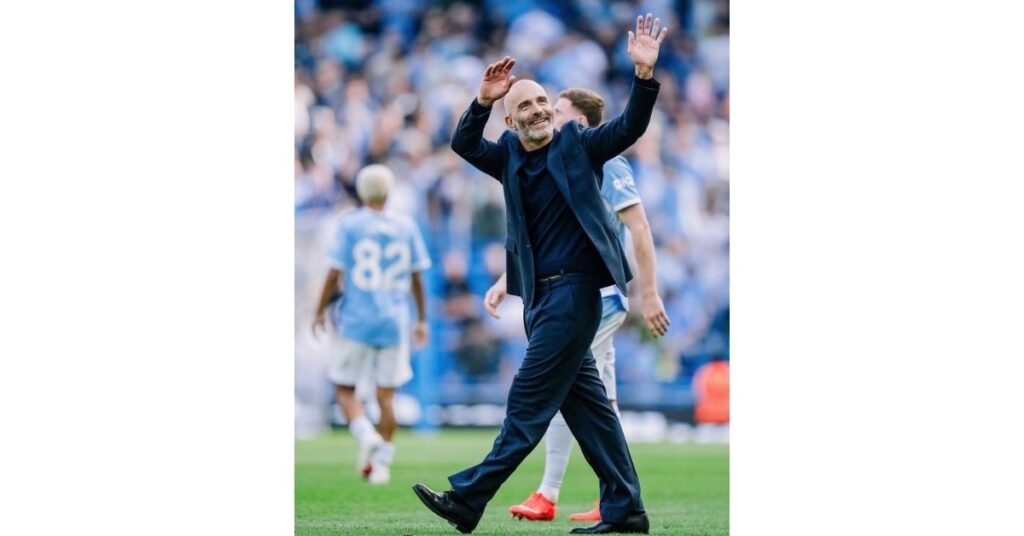
Enzo Maresca after a premier league game at the Ethihad
Where the Game Could Be Won
Ultimately, this could become a battle between Liverpool’s intensity and City’s control.
If Iraola’s side can win the ball high, attack transitions quickly and maintain their defensive distances, Liverpool will have a strong platform to hurt City.
If Maresca’s side can bypass the press, dominate possession and dictate the tempo, Liverpool may be forced to spend much of the game defending.
That is why the opening stages could be particularly significant.
The first 20 minutes may reveal which manager has successfully imposed his tactical plan — and which one will need to make the first major adjustment.
The Final Word
Liverpool vs Manchester City is rarely decided by one factor.
Individual quality matters. Anfield matters. Form matters.
But in a game where the margins are so small, the tactical battle between Iraola and Maresca could ultimately prove decisive.
Iraola will want intensity, pressure and vertical football.
Maresca will want control, structure and possession.
Two different philosophies. One massive Premier League contest.
At Anfield, the manager who adapts quickest may have the final say.